
Thank you for checking out our products
We offer a variety of high pressure filters for air, oxygen, gas, hydraulic fluid, engine lubricant, fuel, and water.
Hydraulic & Pneumatic
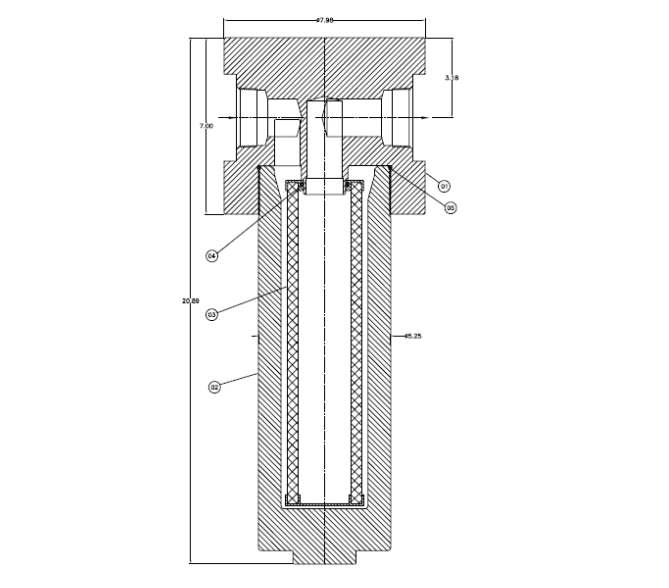
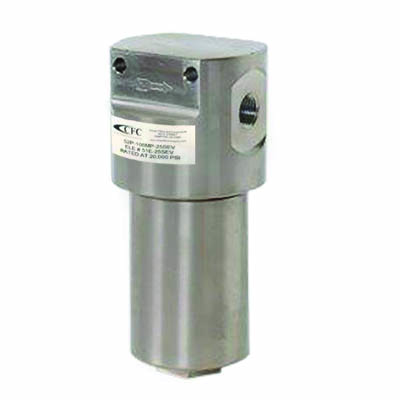
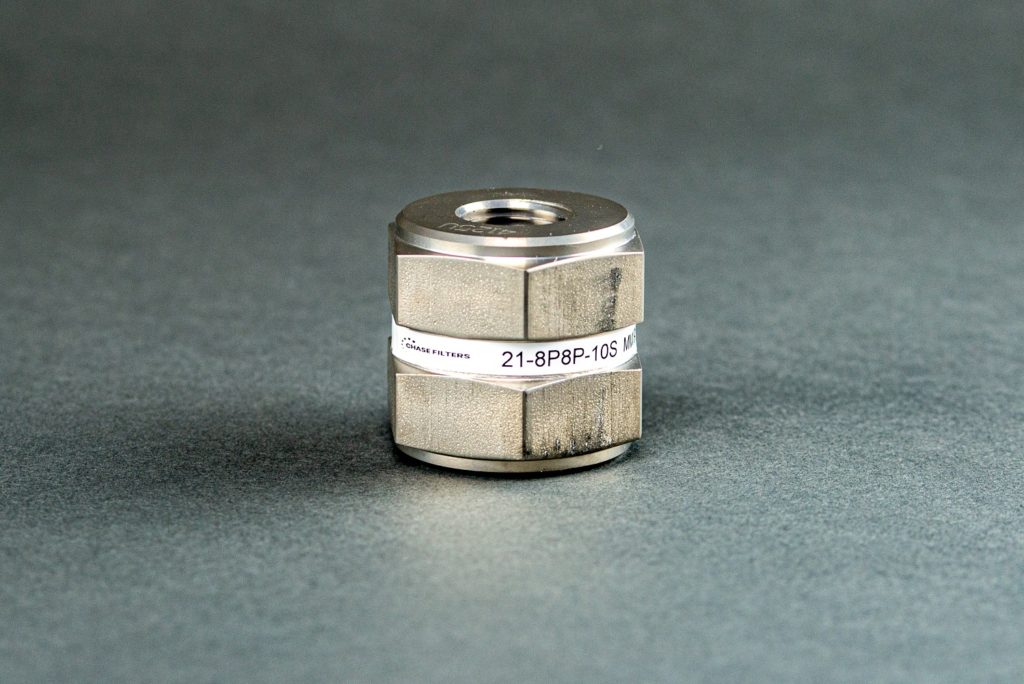
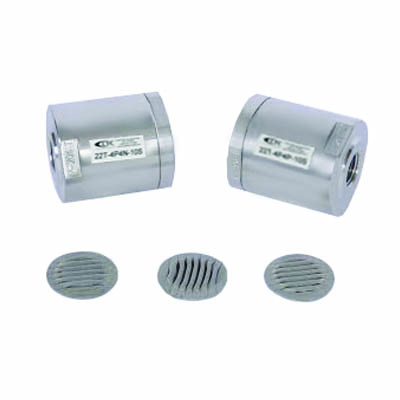
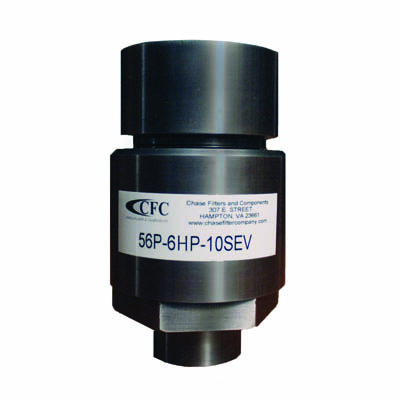

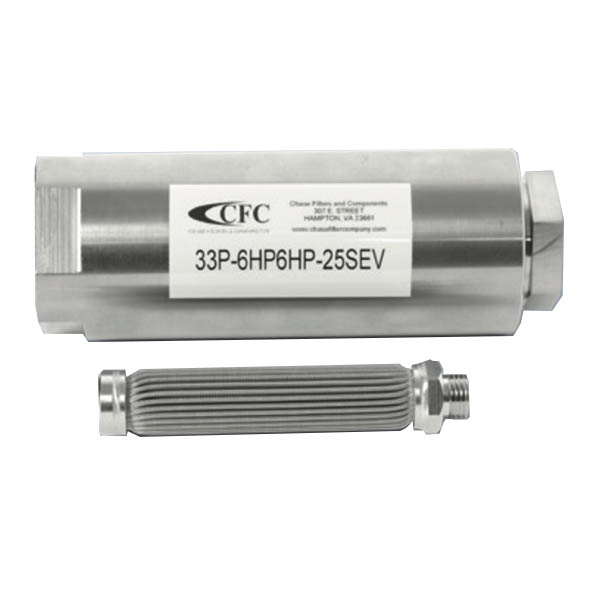
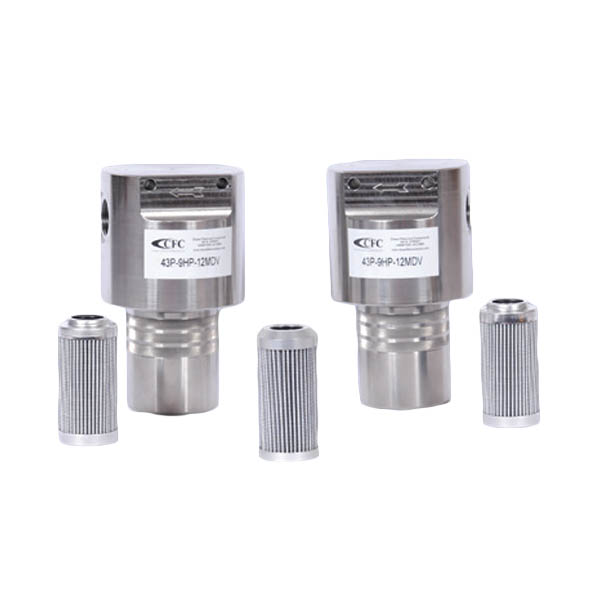
Industrial Hydraulic & Pneumatic Filters | Rated to 60,000 PSI
Hydraulic and Pneumatic Filters
Our industrial hydraulic filters are engineered to withstand up to 60,000 PSI, protecting critical components in test stands, mobile equipment, and aerospace systems. Filters prevent dust, dirt and other contaminants from damaging vital components in hydraulic or pneumatic equipment. These filters keep the contaminants away from the system components, fluids and airways. Without the proper filtration, the damaging substances can invade a hydraulic or pneumatic system, leading to malfunctioning equipment, costly repairs and extensive downtime.
With over 30 years of industry experience, Chase Filters & Components is an industry leader in developing and manufacturing various filter types, including hydraulic and pneumatic filters. We offer off-the-shelf and custom filter solutions, from tank filters to in-line and spin-on filters. We also offer off-line system filters.
How Do Hydraulic and Pneumatic Filters Work?
Pneumatic and hydraulic systems have many similarities and use relatively the same filter styles. Both use pump actuators, valves for control and a medium to transmit mechanical energy. The most significant differences are the type of fluid or gas used for power and their application. Pneumatic systems use a compressible gas for power, while hydraulics uses an incompressible fluid.
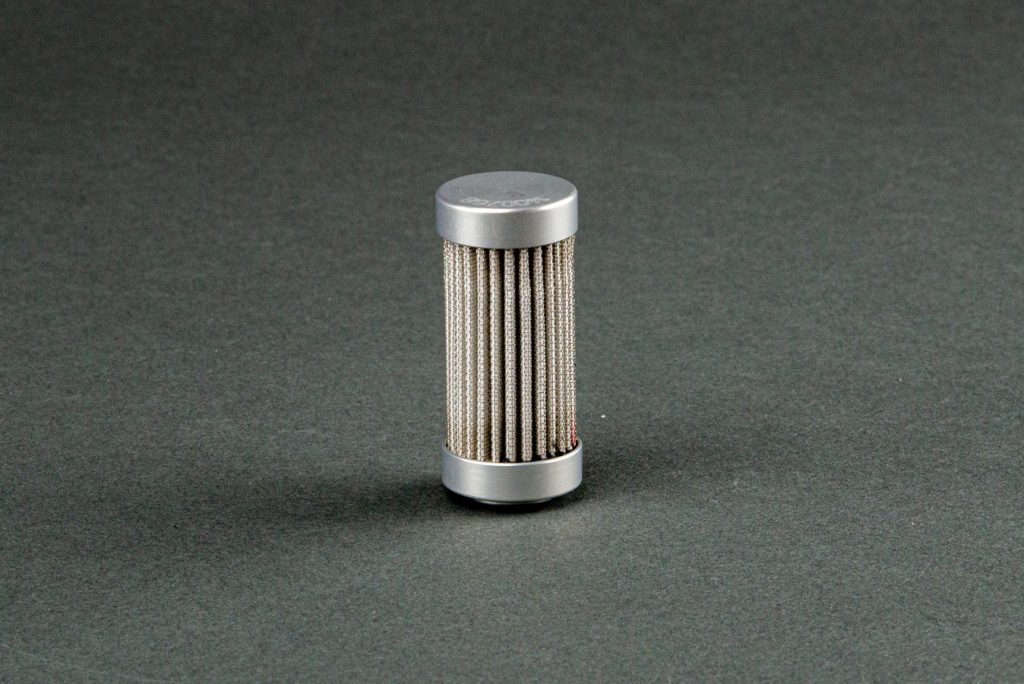
Hydraulic and pneumatic filters block harmful contaminants by forcing the system’s fluid or gas through the filter element. The element traps harmful particles, preventing them from continuing to circulate and damaging the system’s essential components. Contaminants can range from water to dirt to chemicals. For systems where water and vapor removal are the primary concern, coalescing filters provide specialized liquid-gas separation.
These high pressure hydraulic filters fit in various locations to trap contaminants at different intervals. They often work best in tandem before and after the pump, within the reservoir and in the return lines.
Types of Hydraulic and Pneumatic Filters We Offer
Hydraulic and pneumatic systems use filters everywhere, from automobiles and airplanes to manufacturing and chemical processing. Heavy equipment owners in agriculture and construction depend on hydraulic and pneumatic filters to keep their machines running in peak condition.
Some of the specific high-efficiency filter designs we supply include:
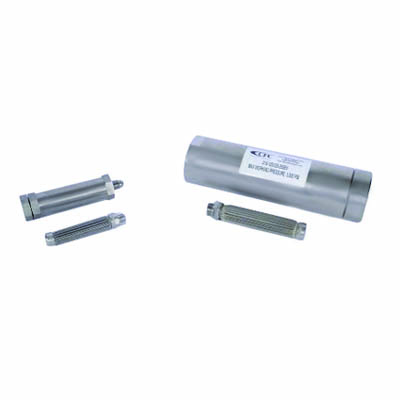
- In-line hydraulic filters: We offer various in-line models for different equipment and systems to keep your system clean and ensure peak protection from contaminants like dirt, dust, sediments, metal shavings and rust.
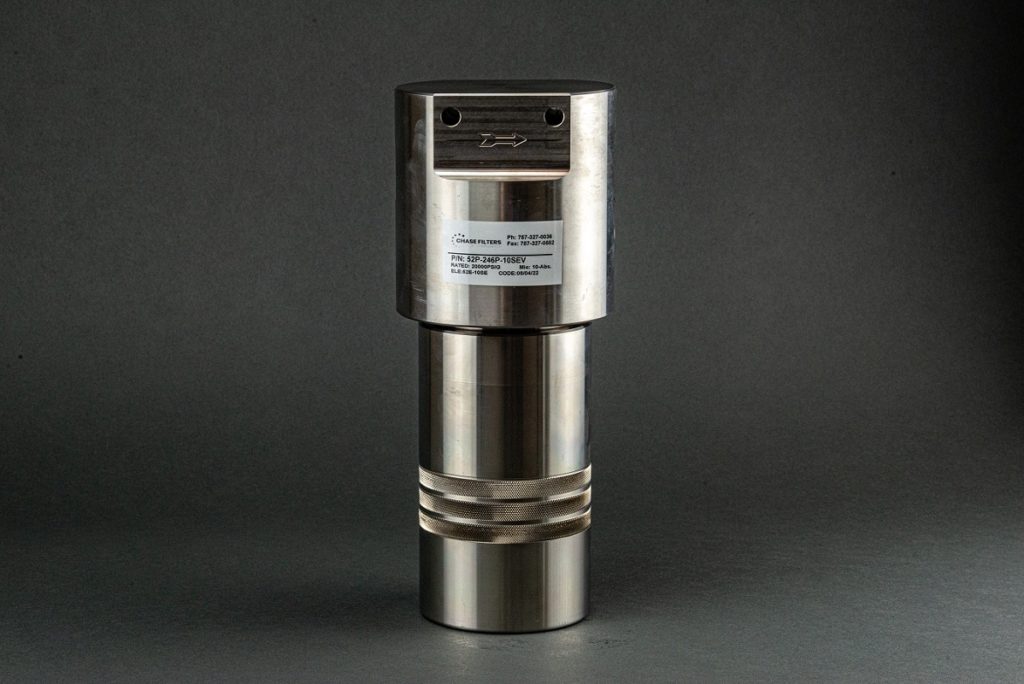
- Tee-type filters: We provide tee-type filters for various system applications. These filters increase the life of your system’s pumps, regulators, valves and other components while reducing downtime and improving productivity.
- Tank filters: Our tank filters contain a reverse taper on the outside wall of the end caps to ensure a positive interlock with the epoxy, preventing disengagement in rough terrain vehicle applications.
- Spin-on filters: These popular filters have all the features you need to optimize system performance and extend your equipment’s life span. They install easily to block the entry of harmful contaminants that can your system’s performance.
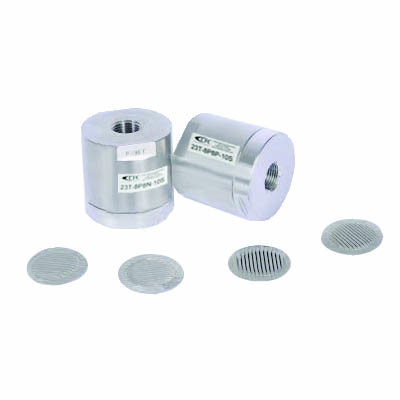
- Filter discs: These discs consist of highly durable 316 stainless steel, ideal for tight spaces within the system where standard filters don’t fit. They work well in front of gauges, in manifolds, valves, regulators and other sensitive equipment.
Choosing Us as Your Hydraulic and Pneumatic Filter Manufacturer
Chase Filters & Components offers the most efficient, high-performance filters available for your application. Our customer service team has decades of technical experience helping customers in product selection and technical expertise. Contact us online today to learn more about how our filters can benefit your operation.
FAQs
Q: What pressure ratings are available for high-pressure hydraulic filters used in automotive manufacturing?
A: Chase’s high-pressure hydraulic filters are engineered to handle pressures up to 60,000 PSI — the highest rating commercially available. Automotive manufacturing systems typically operate in the 3,000–6,000+ PSI range for presses, robotic lines, and CNC machines, and Chase offers configurations across this full spectrum.
Q: What is the difference between inline, manifold-mounted, and duplex high-pressure hydraulic filters?
A: Inline filters mount directly in the hydraulic line to intercept fluid between components; manifold-mounted filters integrate into the manifold block to save space and reduce connection points. Duplex (tee-type) filters house two parallel elements with a diverter valve, allowing one side to be serviced while the other keeps fluid flowing — making them ideal for 24/7 automotive production environments where downtime for filter maintenance is not an option.
Q: What filter media should I use for hydraulic systems in automotive production equipment?
A: Microglass and synthetic fiber media are the industry standard, offering consistent pore structure and high dirt-holding capacity. Servo valves and proportional valves — common in robotic welding arms and CNC machines — require 3–6 micron media targeting ISO 4406 cleanliness codes of 16/14/11 to 18/16/13, while vane pumps and standard valves are well-served by 10 micron media, and general cylinders can use 25 micron.
Q: Do high-pressure hydraulic filters need bypass valves for automotive manufacturing equipment?
A: In most automotive manufacturing applications, bypass valves are standard — they open when differential pressure across the element exceeds a set threshold to prevent pressure spikes or component starvation, and a cold-start bypass allows flow until viscosity normalizes at operating temperature. However, no-bypass configurations are required for servo valve circuits and precision motion control systems where any unfiltered fluid passing through would cause immediate damage. Chase supplies both bypass and no-bypass configurations depending on your application.
Q: How do I know when to replace a hydraulic filter in my manufacturing system?
A: Replace when differential pressure across the element rises 3–5 PSI above the baseline established at installation, or at manufacturer-specified intervals — typically every 300–1,000 operating hours depending on duty cycle and environment. Visual pop-up indicators and PLC-connected differential pressure sensors are the two main monitoring tools, and filters should also be replaced immediately following any contamination event such as a hydraulic line failure or pump breakdown.